
Let’s be honest. For most of us, the internet still feels like a series of pages. We click, we scroll, we type into boxes. But what if the digital world wasn’t just something you look at, but something you could be in? And what if the value created in that world—the data, the assets, the interactions—actually belonged to the users?
That’s the dual promise on the horizon. The spatial web (or Web3D) is about layering digital information onto our physical reality through AR, VR, and smart devices. Web3 protocols are about decentralization, digital ownership, and trustless transactions via blockchain. Separately, they’re fascinating. Combined? They’re a blueprint for a new business reality.
The Convergence: Where Digital Space Meets Digital Ownership
Think of it this way. The spatial web builds the stage—a rich, 3D, interactive environment. Web3 provides the rules of the game—how assets on that stage are owned, traded, and proven authentic. It’s the difference between seeing a virtual sculpture in your living room (spatial web) and actually owning that sculpture as a verifiable, one-of-a-kind digital item (Web3).
This isn’t just sci-fi anymore. Businesses are already prototyping applications that leverage this powerful combo. The pain points they’re solving? Everything from clunky remote collaboration to opaque supply chains and, frankly, shallow online customer experiences.
Tangible Business Applications Taking Shape
1. Immersive Commerce & Product Visualization
Here’s the deal: online shopping is still a game of faith. Does that couch fit? How does that paint color really look on the wall? The spatial web changes that.
Imagine pointing your phone at your backyard and seeing a new patio set, perfectly to scale. Or wearing a VR headset to “walk through” a custom-designed kitchen before a single cabinet is ordered. This is spatial commerce in action, reducing returns and boosting buyer confidence dramatically.
Now, add Web3. That unique digital sneaker you’re previewing in AR could be purchased as a phygital asset—a twin of a real-world item, with its ownership and authenticity locked on a blockchain. It becomes part of your digital identity, usable across different virtual spaces.
2. Training, Simulation & Remote Collaboration
Training a technician to repair a wind turbine? Flying someone to a remote site is costly, and flat video manuals are limited. A shared spatial web environment, built on Web3’s secure data layers, lets trainees interact with a perfect 3D model from anywhere. They can practice procedures, with every action recorded and verified.
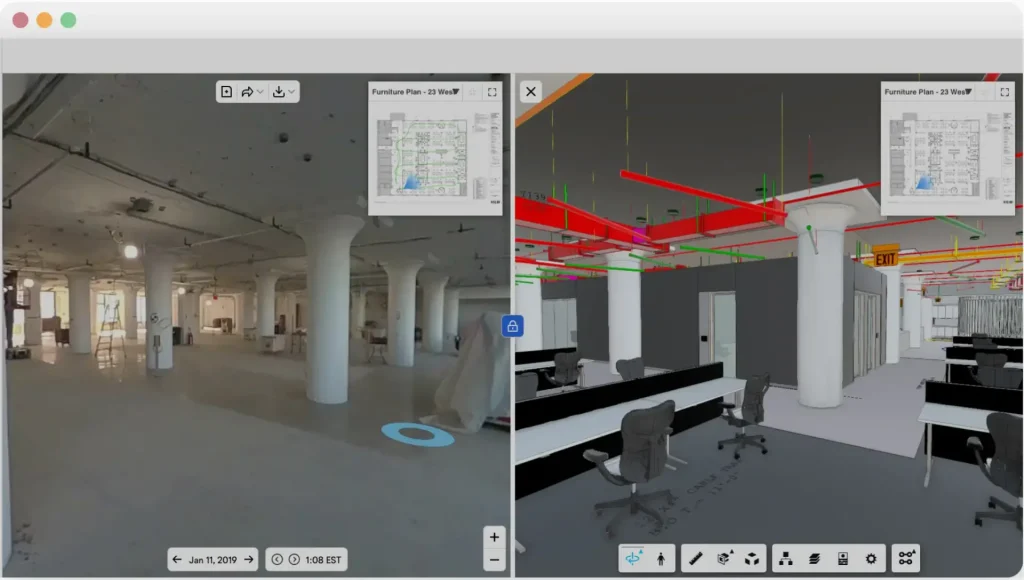
For architects and engineers, this means collaborating on a 3D building model that feels “real,” with changes logged immutably on a blockchain for version control and accountability. It’s the natural, messy, creative process of a physical meeting room, but without the geographical limits.
3. Supply Chain & Logistics Transparency
This is a big one. You know the struggle: tracing a product’s journey from raw material to shelf is a nightmare of fragmented data. Web3 provides the unbreakable ledger. Each step—harvest, shipment, manufacture—is recorded as a transaction.
The spatial web makes that data visible. A warehouse manager could look through AR glasses and instantly see real-time data hovering over each pallet: origin, temperature history, destination. A consumer could scan a product in a store and see its entire journey unfold in 3D animation on their phone. That’s powerful proof of ethical sourcing and quality.
4. Dynamic Advertising & Location-Based Experiences
Billboards are static. Online ads are interruptive. The spatial web allows for digital content that interacts with the physical world. A historical building could “come alive” with AR characters telling its story. A vacant storefront could display digital art or pop-up shop previews.
Web3 enables the micro-economy behind this. You might choose to “see” certain AR layers (like local business offers) and earn tokenized rewards for your attention. Businesses pay only for verified, engaged interactions in specific locations. It turns the whole city into a context-aware, interactive marketplace.
The Infrastructure Shift: What Businesses Need to Prepare For
Okay, so this all sounds promising. But it’s not just plug-and-play. Adopting these technologies means thinking differently about your digital infrastructure.
| Traditional Model | Spatial Web + Web3 Model |
| Centralized servers host all data & logic. | Decentralized networks (like IPFS, blockchain) host assets & verify transactions. |
| User accounts and logins for each service. | Potential for self-sovereign identity (e.g., decentralized IDs) giving users control. |
| Digital assets locked inside a platform (e.g., a game skin). | Truly owned digital assets (NFTs) portable across compatible spaces. |
| Flat, 2D data presentation (websites, apps). | 3D, geospatial, and context-aware data layers. |
The transition, frankly, will be hybrid for a long time. You might start by creating a 3D product catalog (a spatial web move) and later issue digital certificates of authenticity on a blockchain (a Web3 move). The key is to build with interoperability in mind.
Challenges? Sure. They’re Real.
Let’s not gloss over the hurdles. The technology is still maturing. Hardware needs to get better and cheaper. Creating high-quality 3D content is resource-intensive. And the regulatory landscape for Web3 assets is… well, let’s call it fuzzy.
Plus, there’s the human factor. User adoption of AR/VR needs to broaden. And the concepts of digital wallets and private keys can be daunting for the average consumer. The winning businesses will be those that hide this complexity behind seamless, genuinely useful experiences.
The Bottom Line: A More Tangible, Trustworthy Digital Future
We’re moving from an internet of information to an internet of experiences and value. The business applications of the spatial web and Web3 protocols point to a future where digital interactions feel physical, where digital ownership feels real, and where trust is built into the system, not just promised by a brand.
It’s not about chasing a buzzword. It’s about asking: could my customers benefit from visualizing my product in their space? Could my operations be more transparent? Could my team collaborate more intuitively? If the answer’s yes, then the spatial and decentralized web isn’t just a tech trend—it’s the next logical step in your digital transformation. The foundation is being laid now. The question is what you’ll choose to build on it.